

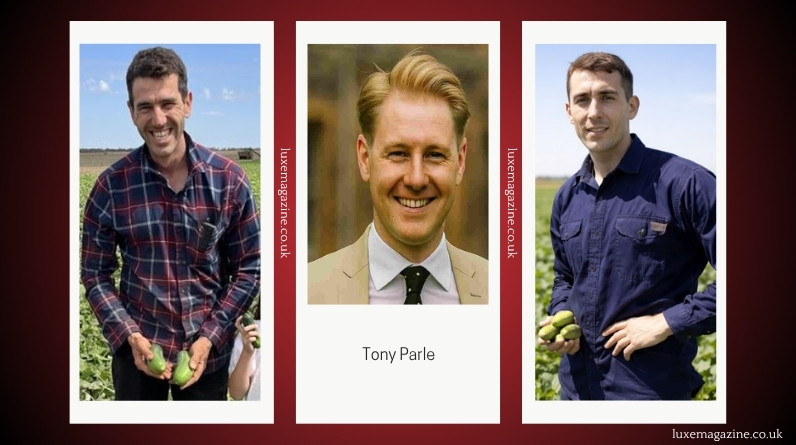
- Tony Parle is an Australian agribusiness figure known for large-scale gherkin and pickle production.
- He is widely associated with supplying pickles for McDonald’s Australia.
- His family-run farming operation grew from regional agriculture into a recognised food supply business.
- Tony Parle is a third-generation farmer who combined deep farming expertise with food-processing operations.
- His career spans business expansion, financial challenges, and long-term recovery.
- Interest in Tony Parle has grown steadily due to public curiosity about food sourcing and agricultural entrepreneurship.
Tony Parle is an Australian farmer and agribusiness entrepreneur best known for his long-standing connection to pickle production for McDonald’s Australia. His name may not appear on entertainment headlines, but he has become increasingly recognised online because of his role in one of the country’s most unusual food supply success stories.
Behind the pickles found in millions of burgers is a farming operation built on precision, consistency, and long-term planning. Tony Parle’s career reflects how specialised agriculture can grow into a nationally significant business — and his journey also captures the reality of modern farming, where food safety standards, logistics, and timing matter just as much as what you grow.
Quick Facts
| Full Name | Tony Parle |
|---|---|
| Known For | Australian gherkin and pickle production |
| Nationality | Australian |
| Birthplace | Griffith, New South Wales, Australia |
| Profession | Farmer, agribusiness operator, entrepreneur |
| Industry | Agriculture and food processing |
| Years Active | Several decades in agribusiness |
| Famous Connection | Supplying pickles linked to McDonald’s Australia |
| Nickname | “Pickle King” and “Gherkin King” |
| Business Names | Parle Foods; Australian Frozen Foods |
| Net Worth | Not publicly confirmed |
| Family Involvement | Family-run farming and processing business |
Who Is Tony Parle?
Tony Parle is an Australian agribusiness figure associated with large-scale gherkin farming and pickle production in New South Wales. He gained wider attention because of his reported role in supplying pickles used by McDonald’s Australia — a partnership that reportedly began in the late 1980s and has endured for decades.
Unlike entertainment celebrities or social media personalities, Tony Parle’s recognition comes entirely from agriculture and food supply. His reputation has developed through decades of operational consistency rather than public promotion — which makes it all the more notable.
Online interest in Tony Parle has grown as more readers search for information about the people behind major food supply chains. His story appeals to audiences interested in farming, entrepreneurship, and Australian business success stories told without fanfare.
Distinguishing Tony Parle From Other Individuals
There are multiple individuals named Tony Parle appearing in online search results. Some references relate to legal professionals or business executives in entirely unrelated industries.
However, the most widely discussed Tony Parle is the Australian farmer linked to gherkin production and McDonald’s pickle supply operations. Clarifying this distinction matters because many competing articles fail to separate the identities clearly.
Early Life and Background
Growing Up in Griffith, New South Wales
Tony Parle was raised in Griffith, a regional agricultural area in New South Wales known for irrigation farming and large-scale crop production. The Riverina region has long been one of Australia’s key farming centres, producing fruit, vegetables, grains, and wine grapes across vast irrigated plains.
Growing up in this environment meant agriculture was never abstract — it shaped the local economy, the community’s rhythm, and the expectations placed on the next generation of growers.
Family Farming Heritage
Tony Parle is described in multiple sources as a third-generation farmer, which means agricultural knowledge and responsibility were passed down well before he took the reins. Many Australian farming enterprises operate this way, with accumulated experience giving families a practical edge that newer entrants simply cannot replicate quickly.
In Tony Parle’s case, that family-based structure became a defining part of the business identity — and a source of resilience during the harder chapters of his career.
Why His Background Matters
Understanding Tony Parle’s upbringing helps explain how he later built a specialised agribusiness operation. Regions like Griffith demand adaptability. Growers must constantly respond to changing weather conditions, water availability, and market demand — often all at once. Those pressures tend to produce either very capable operators or very cautious ones. Tony Parle became the former.
Career Journey
Transition Into Gherkin Production
Tony Parle originally worked within broader farming operations before pivoting into specialised gherkin cultivation — a shift that proved more consequential than it might first appear. Gherkins grown for pickling are far more demanding than most vegetable crops.
A cucumber intended for pickling can become commercially useless within as little as 48 hours of reaching the right size. That narrow harvesting window demands careful crop monitoring, fast logistics, and a well-coordinated workforce — skills that took years to develop and are difficult for competitors to replicate at scale.
Building a Vertically Integrated Business
One of the most important aspects of Tony Parle’s career was the development of a vertically integrated agribusiness model. Rather than simply growing crops and selling them on, the operation reportedly expanded to cover:
- Gherkin cultivation and seed selection
- Harvest management and logistics
- Fermentation and brining
- Slicing and processing
- Packaging and supply distribution
This structure improved quality control and operational efficiency. It also positioned the business as a genuine food supply partner rather than just a grower — which matters enormously when dealing with clients at the scale of McDonald’s.
Supplying McDonald’s Australia
Tony Parle became widely associated with supplying pickles linked to McDonald’s Australia, with that partnership reportedly established in the late 1980s. Connecting a regional family farm to one of the world’s largest fast-food companies was a significant achievement — and sustaining it for decades was arguably the harder task.
Maintaining this type of supply relationship requires consistent quality, strict food safety compliance, and reliable large-scale production. Even minor inconsistencies can cause serious disruption to national supply chains. The reported longevity of the arrangement reflects how seriously the operational side of the business was managed.
Business Expansion and Financial Challenges
Like many agricultural entrepreneurs, Tony Parle also faced serious challenges. Reports linked to his business history describe attempts to diversify beyond gherkins and pickles into broader frozen vegetable production — including brands operating under names such as Parle Foods and Australian Frozen Foods.
Expansion in agriculture carries real financial risk. Operations depend heavily on weather, water supply, labour costs, and shifting market conditions. In Tony Parle’s case, public reports describe receivership, significant debt pressure, and drought-related crop losses as part of that difficult period.
The recovery phase, however, became a defining part of his story. By refocusing on the core strength — pickle production — the business found its footing again. That kind of recalibration is rarely straightforward, and it speaks to the resilience that has become central to how Tony Parle is discussed within Australian agricultural circles.
Tony Parle’s Connection to McDonald’s Australia
Why This Partnership Matters
Most readers discover Tony Parle through curiosity about McDonald’s supply chains. That interest makes sense — consumers increasingly want transparency about where food ingredients come from and who actually produces them.
The idea that a family-run regional farm in New South Wales could sustain a decades-long supply relationship with a global fast-food brand makes Tony Parle’s story genuinely compelling. It reframes the pickle on a burger from a throwaway ingredient into something with a real, traceable origin.
The Importance of Consistency
Fast-food supply chains are built on standardisation. Customers expect the same taste and texture whether they are in Sydney or Perth, and that means suppliers must deliver products with near-identical quality at scale, every single time.
For a gherkin producer, that involves:
- Precise crop timing within narrow harvesting windows
- Controlled fermentation and brining
- Rigorous food safety compliance
- Reliable transportation logistics
- Consistent slicing and packaging standards
Tony Parle’s operations reportedly succeeded on this front not through rapid publicity or aggressive marketing, but through operational discipline built over many years.
How Tony Parle’s Pickle Business Works
Precision Farming
Gherkin farming is highly time-sensitive in a way that most crops simply are not. A cucumber intended for commercial pickling can become oversized and commercially unusable within 48 hours of reaching peak specification. That creates a harvesting window so narrow that it requires constant crop monitoring, a responsive workforce, and logistics that leave very little room for error.
This pressure is one of the reasons gherkin production never became a commodity crop in Australia — few growers have been willing or able to manage it at scale.
Fermentation and Processing
After harvesting, the cucumbers are transferred into brine where fermentation takes place over several weeks. This process develops the sharp, tangy flavour profile associated with commercial pickles and ensures the texture holds up once sliced and packaged.
Processing then involves slicing, quality checks, and packaging to industrial food standards — steps that are handled in-house as part of the vertically integrated model Tony Parle became known for.
Why Specialisation Helped Tony Parle
Many profiles mention Tony Parle’s farming success without explaining why focus mattered so much. By committing heavily to gherkin production rather than spreading across multiple crops, the business built expertise that general farming operations could not easily replicate. Specialisation also drove efficiencies that made the business more reliable as a supplier — and reliability, in commercial food supply, is worth more than almost anything else.
Major Achievements and Industry Impact
Building a Recognised Agribusiness
Tony Parle became known within Australian agricultural circles for transforming a regional family farm into a recognised supplier within national food manufacturing. That kind of transformation rarely happens by accident — it requires sustained investment in process, people, and quality over a long period.
Supporting Regional Employment
Large farming and processing operations contribute significantly to rural economies. Businesses like Tony Parle’s create employment in cultivation, logistics, processing, machinery maintenance, and administration — roles that matter considerably in regions where job diversity is limited.
This regional impact is often overlooked in online profiles, but it represents an important and underacknowledged part of his broader contribution to the Riverina area.
Influence on Agricultural Entrepreneurship
Tony Parle’s journey is frequently cited as an example of niche agricultural entrepreneurship done right. Instead of trying to dominate multiple sectors simultaneously, his success came from mastering a single specialised market and holding that position through quality and consistency.
For modern agribusiness operators, that approach offers a practical lesson — that depth in one area can outlast breadth across many.
Tony Parle Family and Personal Life
A Family-Run Business
One of the most searched phrases related to Tony Parle is “Tony Parle family”. Although detailed personal information remains private, reports consistently describe the operation as family-run — with shared responsibilities and long-term commitment central to how the business has operated across generations.
Family-run agricultural enterprises often carry a different kind of accountability than corporate-owned operations. The stakes are personal as well as financial, which can drive both greater resilience in difficult periods and stronger attention to quality.
Why He Maintains Privacy
Unlike entertainers or media personalities, Tony Parle has largely stayed outside public life. His recognition comes from what his business produces and supplies — not from personal publicity. This explains why verified information about his spouse, children, or private relationships is limited online.
For many farming entrepreneurs, that distance from media culture is deliberate. It allows greater focus on the operational side of the business and the community responsibilities that come with running a large regional employer.
Net Worth and Business Scale
Tony Parle’s net worth has not been publicly confirmed. Private agricultural business owners rarely disclose personal financial details, and unlike listed companies or entertainment figures, there is no reliable public filing to draw from.
The scale of operations associated with his name does, however, suggest involvement in substantial commercial agriculture and food processing. Readers who encounter speculative net worth figures online should treat them with caution — none have been independently verified.
Latest Updates and Current Status
Tony Parle continues to attract public interest, primarily through ongoing discussions about food sourcing, Australian agriculture, and supply-chain transparency. Recent online coverage has focused less on celebrity-style reporting and more on his significance as a regional producer within a global food system.
That framing feels appropriate. His story remains relevant not because of any single announcement, but because the questions it raises — where does our food come from, and who grows it? — are only becoming more important to consumers.
Lesser-Known Facts About Tony Parle
- Tony Parle is sometimes referred to as the “Pickle King” or “Gherkin King” in Australian media coverage.
- His farming operations are associated with large-scale pickle production in New South Wales, linked to business names including Parle Foods and Australian Frozen Foods.
- Gherkins used for commercial pickling can become oversized and commercially unusable within as little as 48 hours of reaching the right size.
- His business is described as spanning multiple stages of production — from crop cultivation through to fermentation, slicing, and packaging.
- Interest in Tony Parle increased significantly through online searches related to McDonald’s ingredient sourcing and food supply transparency.
FAQs About Tony Parle
Who is Tony Parle?
Tony Parle is an Australian farmer and agribusiness entrepreneur known for gherkin farming and pickle production linked to McDonald’s Australia.
What is Tony Parle known for?
He is best known for large-scale pickle production and a long-term food supply partnership within the Australian agricultural sector.
Is Tony Parle connected to McDonald’s Australia?
Yes. Tony Parle is widely associated with supplying pickles connected to McDonald’s Australia, with that relationship reportedly beginning in the late 1980s.
Where is Tony Parle from?
Tony Parle is from Griffith in New South Wales, Australia.
Is Tony Parle’s business family-run?
Yes. Reports consistently describe the operation as a family-run farming and processing business, with Tony Parle reported to be a third-generation farmer.
What does Tony Parle do?
He works in agriculture and food processing, specialising in gherkin cultivation and pickle production.
Is Tony Parle’s net worth public?
No. There are no verified public figures regarding Tony Parle’s personal net worth.
Why is Tony Parle trending online?
Interest in Tony Parle has grown because readers are increasingly curious about food sourcing and the suppliers connected to major global brands like McDonald’s.
Conclusion
Tony Parle represents a different kind of public figure — one whose recognition comes not from entertainment or self-promotion, but from decades of quiet contribution to agriculture and food supply. His connection to McDonald’s Australia transformed a regional family farm into a widely discussed business success story.
From gherkin cultivation to industrial food processing, his career reflects the importance of precision, consistency, and the willingness to recover from serious setbacks. That combination is rarer than it sounds, and it explains why Tony Parle’s story continues to resonate with people curious about how food actually gets from the ground to the plate.
As conversations around food transparency and sustainable agriculture continue to expand, Tony Parle remains an example of how deep specialisation and stubborn operational discipline can quietly achieve national relevance — while staying firmly rooted in regional Australian farming.